

Lying About Churchill
Responding to Richard Evans on the historicity of the 'Zionist lobby'

Winston Marshall: “The next generation of people fighting for the truth against the conspiracy theorists: what wisdom do you have to impart to them?”
Richard Evans: “First of all, take it seriously. Address them for what they are. Tackle them head-on. Do the work. Interrogate them. Ask where they got their sources from and what they did with them. I think that’s the most important thing.”
Winston Marshall asked some good questions in his interview with Richard Evans. I particularly liked the one above, and Evans’ reply to it. I agree that the next generation should fight conspiracy theorists by inspecting sources and the use of them. Evans said rightly that “if the evidence is overwhelmingly compelling about Hitler as the man who started World War 2 as the beginning of a deliberate attempt… to take over the world… you can’t just deny the evidence.” Evidence is what we can trust more than anything else. Marshall then acknowledged, and Evans agreed, that “the history of the war is the founding story of the modern era” and “perhaps that’s one of the reasons it’s being relitigated.”
The history of the war is being relitigated like never before. 2024’s interview between Tucker Carlson and Darryl Cooper is still provoking reactions from anti-fascist historians, and Carlson interviewing Nick Fuentes in October 2025 has inflamed them further. Richard Evans, author of the book Lying About Hitler, has been called upon to dispatch these conspiracy theorists.
Historicity of the Jewish lobby
I object to Evans’ response to another of Marshall’s good questions, that of whether, paraphrasing Cooper, “Churchill was funded by Zionists” which Marshall said “originates with David Irving” and “is a David Irving idea”. Evans said that Cooper, building on Irving, said that Churchill:
“went bankrupt and Jewish financiers and media moguls put [him] as it were back on his feet, but this is all absolute nonsense. I mean Churchill was a member of one of the richest families in Britain, the Duke of Marlborough, owners of Blenheim Palace and so on, definitely a member of the British upper classes. He did support the idea of a state of Israel, but the idea there’s a kind of huge Jewish conspiracy backing Churchill later on against Hitler [is] a classic conspiracy theory joining the dots in a way that seems to suggest one thing but it’s all built on a tissue of disinformation.”
Marshall mentioned that “it was the case that [Churchill] was constantly on the edge of being broke and would then write…”, referring to articles and books. Evans agreed that Churchill, like Lord Salisbury, supported himself by writing. Marshall persisted: “it was true that he struggled with money, right?” Evans: “sometimes, yes.” Marshall: “the idea is that there was some sort of lobbying interest group that Irving and Cooper might allege were entirely Zionists…” Evans: “That’s the problem. You smell a rat any time you hear anyone talking about a Jewish lobby. That is an anti-Semitic conspiracy theory. No group in the modern world has been as divided as the Jewish community, and you can still see that today.”
Eugen Spier
The existence of a ‘Jewish lobby’ and ‘funding by Zionists’ are not mere theories. Evidence of Jews and/or Zionists funding and supporting Churchill’s political activities comes directly from Eugen Spier, co-founder of the Focus (also known as the Focus Group or the Anti-Nazi Council), and Robert Henriques, the biographer of Sir Robert Waley Cohen, who was another co-founder and the main fundraiser. Spier was a wealthy Jew who immigrated from Germany in 1922 and released the book Focus in 1963. He recounts that Churchill asked him not to publish the book until after his (Churchill’s) death.1 He then describes the founding of the group in 1935 and its activities between then and 1939. According to Spier,
“groups embracing members of every religious and political body were being organised up and down the country to bring help to victims of Nazi brutality. From 1933 onwards I was being continuously approached to assist in fighting antisemitism. Among those who came to see me was a Mr. A. H. Richards who sought my co-operation both in combating Hitler’s propaganda and in helping his victims. Many prominent people had already promised to help.”2
Spier says that he objected to treating the Nazis as a threat to Jews specifically as opposed to the whole world. Gentiles would be difficult to recruit if not convinced that the threat was to themselves too. Spier continues:
“Richards was much excited by my views. They represented, he declared, just what he and his friends were thinking, but he had not felt it wise to make his first approach to me in such terms. He had been given to understand that I was deeply affected by the sufferings of my fellow-Jews and he had therefore raised antisemitism as the primary issue… He then disclosed the names of some of the people with whom he was associated.”
To Spier’s “joy” they included Sir Winston Churchill, Lady Violet Bonham Carter, Henry Wickham Steed, Oliver Locker-Lampson, Sir Robert Mond, Sir Robert Waley-Cohen and Sir Archibald Sinclair.3 All were Zionists, except Spier and Richards of whose opinions I am not sure. All the funding appears to have come from Jews: Spier and Mond initially, then Cohen on behalf of others later. Churchill, the most famous person present, had already been condemning Germany in Parliament, on the BBC and in the press since soon after Hitler became Chancellor, and his inclusion in government became the particular object of the Focus’ campaigning, alongside the establishment of a Ministry of Supply and a Ministry of Information. The Focus itself was secret and would operate under other names (including the Defence of Peace and Freedom) and via front groups. Spier says that he told his wife about the Focus in confidence and that they thereafter referred to Churchill by the codename Oscar, meaning “the spear of God”.4 He told Churchill in 1938 that it was “one of the objects of the Focus to provide its members, and you most of all, with just those facilities which a party machine provides, publicity by public meetings, through the press and our publications.”5 This quasi-party had included Tories and Liberals from the start, and by then included prominent Labour politicians too, including Clement Attlee and Hugh Dalton who later served as ministers under Churchill. At about the same time, when the Focus took control of the League of Nations Union’s magazine Headway, Spier asserted that “Our campaign was avowedly all-party, while the policy of the new Headway would be to turn out the Conservative government.”6
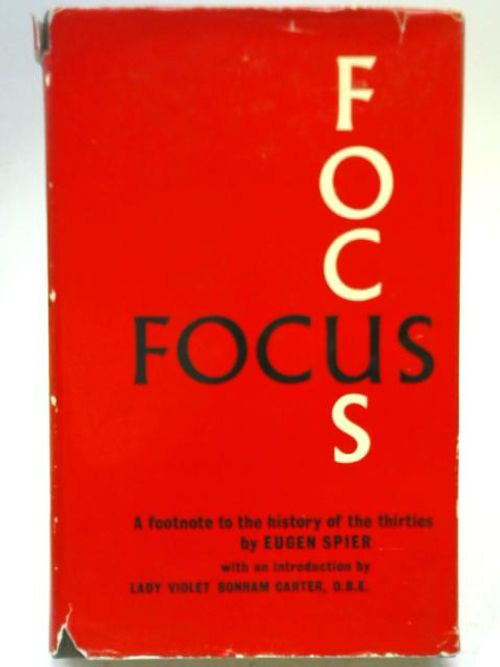
Recalling the origins of the group, Spier’s aims had grown: “In the meantime [1938] I had embarked on a project of my own, the evacuation of all Jews then under Nazi rule.”7 Violet Bonham-Carter prefigured the rhetoric of refugee-cum-anti-fascist activists today: according to Spier, she “had repeatedly reminded our politicians that it was the very glory of this country that British shores throughout the centuries had offered sanctuary to the oppressed and that Britain had thrown its doors wide open to fugitives and those who were persecuted.”8 Refugees like Stefan Lorant (Istvan Reich), Emery Reeves (Imre Revesz) and Jurgen and Ursula Kuczynski contributed to the Focus’ cause and the promotion of Churchill, as I have discussed in previous essays.9 Revesz’ assistance to Churchill, given specifically because of Churchill’s anti-German stance, was particularly lucrative and as helpful to Churchill as the large gifts of money he received from others.
In contrast to the members’ favourability toward Jews, co-founder Henry Wickham Steed “detested Germans in general”10 as did Robert Vansittart, the civil service head of the Foreign Office from 1930 to 1938 and a sometime attendee of Focus meetings. Steed, as editor of The Times before the Great War, had urged the government to fight Germany in 1914. Churchill also had a long history of belligerence toward Germany, as did his close friend Frederick Lindemann, later Lord Cherwell.
Robert Henriques
Robert Henriques was given access to the papers of Sir Robert Waley Cohen, his wife’s grandfather, in order to write his posthumous biography. He relates that in 1936, “Every week Bob and a few other leaders of Anglo-Jewry met at New Court”, the London headquarters of the Rothschild financial interests, “to plan a form of defence against anti-Semitic propaganda. In June, Bob, and several others had an interview with the Home Secretary and returned with the assurance that the Government would do everything in its power to arrest what it acknowledged to be “a growing evil”.” Waley Cohen was, among other things, a Vice-President of the Board of Deputies of British Jews. There was a perceived need “to find a platform which would enlist the whole-hearted support of the greatest possible number of Gentile friends.” The Focus became that platform, and
“it was decided at New Court to raise a secret fund, initially of £50,000, which would work with the sympathetic non-Jewish organisations as well as with the Jewish Telegraph Agency […] Bob agreed to raise, control and administer this fund. [...] Bob insisted from the start that the Jewish defence movement must concentrate on attacking Nazi philosophy and its denial of human rights, rather than on the direct refutation of anti-Semitic propaganda. …[H]e insisted that propaganda should be directed against ‘pursuing peace without caring for freedom and justice’ - a summary of the British policy of appeasement.”
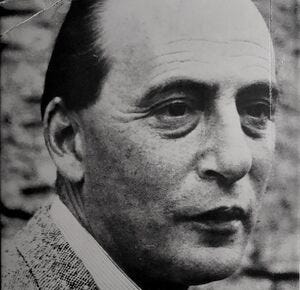
The same “leaders of Anglo-Jewry” later began to fund Neville Laski as well as the Focus, enabling Laski to suspend his private business as a lawyer and pursue the communal ‘self-defence strategy’, of which the Focus was another component, in his capacity as the President of the Board of Deputies.11 In terms of communal hierarchy, the Board was evidently junior to the unnamed “leaders” who regularly met at New Court.
Jewish self-defence
According to Richard Hawkins, the Focus, also known as the Anti-Nazi Council, was a continuation of the British branch of the World Non-Sectarian Anti-Nazi Council for Human Rights, started in the USA in 1934 by the wealthy lawyer and Jewish activist Samuel Untermyer and intended initially to co-ordinate a global boycott of Hitler’s Germany to effect regime change.
“In April 1936, Winston Churchill joined the WNSANCHR… In July, the Board of Deputies of British Jews created a secret fund to support anti-Nazi groups including the WNSANCHR. At a meeting on October 15, the WNSANCHR, at the suggestion of Churchill, decided to establish a Focus in Defence of Freedom and Peace movement. The Focus helped revive Churchill’s political career. As Eugen Spier later observed, ‘Later on it was easy to forget the part [the Focus] played in creating a platform for Winston Churchill at a time he was in the political wilderness.’”12
Untermyer launched his boycott in March 1933. Zbynek Vydra describes it as having the goal of “terminating Jewish persecution by overthrowing Hitler” and says it “was meant to be one of the means of bringing Germany down on its knees.”13 In Untermyer’s words, the aim of his “purely defensive economic boycott” was to “undermine the Hitler regime and bring the German people to their senses by destroying their export trade on which their very existence depend[ed].”14 Hawkins and Vydra, as well as Sharon Gewirtz and Daniel Tilles, have contributed illuminating work on the Untermyer boycott and the early activities of the Anti-Nazi Council and other components of ‘communal self-defence’ which came to constitute a “Jewish foreign policy” (Vydra).15 Evidently the policy could not be effective unless it supplanted the existing British foreign policy with which it directly contrasted, hence the need to either pressure the government into adopting it or, as Spier said, “turn out” the government and replace it with one led by Churchill.
Much of the government and state were amenable to pleas from leading members of the Board of Deputies or even their relatives. Gewirtz describes Robert Vansittart meeting Neville Laski, Robert Waley Cohen and others to advise them on how best to conduct Jewish domestic policy and obtain the most from their relations with civil servants and politicians.16 Laski’s brother Harold, a leading Labour activist and a sympathiser with communism and the Soviet Union, was also able to directly lobby the Home Secretary to have the British Union of Fascists banned from conducting uniformed demonstrations.17
In his book Twilight of Truth, which is vehemently critical of Neville Chamberlain and appeasement, Richard Cockett describes the relationship between Vansittart and Reginald Leeper and the Focus and Churchill, including having many of the same sources of intelligence. (Cockett contradicts Spier by saying that Churchill joined the Focus in 1936 at the prompting of Leeper whereas Spier says Churchill was present and active from the first meeting in 1935.)18 Lord Lloyd, another extremely anti-German Focus member, became the first head of the British Council, an overtly “anti-fascist” propaganda initiative of Leeper’s which worked to the same purpose as the Focus.19
Corroboration
Other historians, even if concerned to dispel anti-Semitic conspiracy theories, still acknowledge that a Jewish lobby supported Churchill for his anti-German stance. As Michael Cohen says, “When Churchill joined Focus, an anti-appeasement group formed by, among others, [Sir Henry] Strakosch and Lord Melchett [Sir Robert Mond], his political opponents spread stories that he was in the pockets of the Jews.”20 Martin Gilbert, the admiring biographer of Churchill, corroborates Cockett in regard to the collaboration of Churchill, Vansittart and Leeper that centred on the Focus, emphasising their inclusion of leftists like Walter Citrine and several leading Labour MPs.21 Gilbert also makes frequent references to the Focus (under its operating name ‘Defence of Peace and Freedom’ or ‘Freedom and Peace’).22 He quotes Spier on the “formation and working of Churchill’s Anti-Nazi League”.23 Gilbert highlights Churchill’s remark to his son Randolph in November 1936 that
“the basis of the Anti-Nazi League, which he had recently helped to launch, ‘is of course Jewish resentment at their abominable persecution. But we are now taking broader ground rather on the lines of my Paris speech.’ A Peace with Freedom committee had been formed. It aimed ‘at focusing and concentrating the efforts of all the Peace societies like the New Commonwealth and the League of Nations Union in so far as they are prepared to support genuine military action to resist tyranny or aggression.’”24
Roy Jenkins’ strongly admiring biography of Churchill includes discussion of the “the Focus Group” and its activities in some detail.25 The Focus is also described by Gerard de Groot as a “secret organisation” among frequent mentions in Liberal Crusader, his biography of the Focus co-founder and old friend of Winston Churchill, Sir Archibald Sinclair.26
Financing Churchill personally
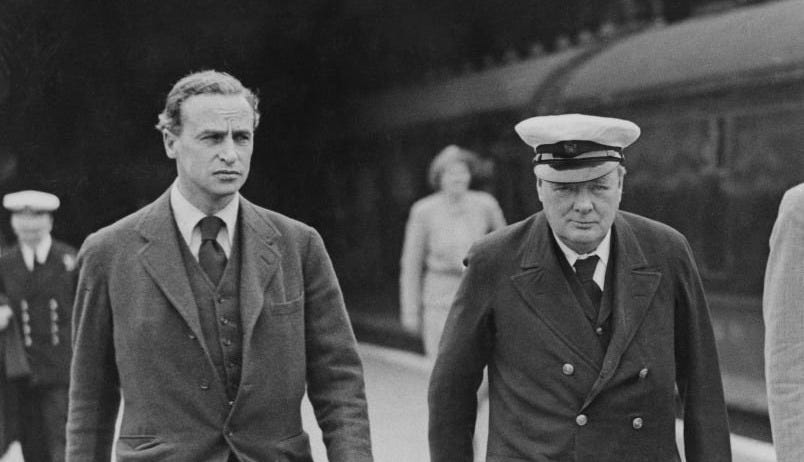
Having covered the evidence for direct Zionist and/or Jewish support for Churchill’s political activities, we should mention No More Champagne by David Lough, a book which though approving of Churchill is frank about his financial ineptitude. Evans’ remarks about the Churchills’ ancestral wealth failed to account for Winston’s tendency to overspend, gamble in casinos and speculate in shares. Lough shows Sir Henry Strakosch to be both an outstandingly generous funder of Churchill personally between 1938 and Strakosch’s death in 1943 and a supplier of intelligence to Churchill. His interest in financing Churchill appears to have been to keep Churchill in politics when he came close to retiring because Churchill was the best available champion of an anti-Hitler policy.27
Lough also refers to “the American arm of [the] Focus”, a network of Jewish activists centred on Jacob Landau, founder of the Jewish Telegraphic Agency. They intended to pay Churchill to visit the USA to “launch a parallel American Focus group” with speeches in major cities. The kernel was assembled; Churchill would reach out to recruit gentiles. Churchill had to cancel the trip but remained a correspondent of Landau, as he was of Felix Frankfurter and Bernard Baruch, both Zionists, Jewish activists and close advisers to Franklin Roosevelt. Eugen Spier describes Henry Wickham Steed taking a similar trip to the USA to co-ordinate with the Focus’ collaborators there in 1938.28
When Churchill became Prime Minister, British Security Co-ordination was established to support pro-war forces in the USA and vilify their opponents. In How the Jews Defeated Hitler, Benjamin Ginsberg describes Jews’ crucial roles in the American equivalent of the Focus. Quoting myself,
“Ginsberg attributes the weakening and discrediting of American nationalists and anti-communists to “the relentless media and public information campaign” conducted by the Fight for Freedom Committee (FFF), the Century Group, the American Jewish Committee, the Anti-Defamation League of B’nai B’rith (ADL) and others. Ginsberg refers to the first two as a union of “Jews and members of the Eastern establishment”; both included the financier James Warburg, the founder and owner of Viking Press, Harold Guinzburg, the intelligence agent Allen Dulles and several Hollywood film producers including two of the Warner brothers. Allen Dulles was a leading member of the Council on Foreign Relations (CFR), an overtly elitist policy group also composed of Jews and Eastern establishment figures, which was created to lobby for global governance and the largest business interests under the name of ‘internationalism’. Ginsberg says that the FFF “worked closely with British intelligence services” under the name of British Security Co-ordination (BSC) which “found in the FFF a useful ally to help them discredit America First.” The BSC supplied “newspaper editors associated with the FFF” with material to justify denunciations of American patriots as traitors and Nazi agents. Ginsberg adds that “BSC also coordinated efforts with the FFF to disrupt America First rallies”, in which they were joined by Jewish gangsters and hired thugs under the leadership of Meyer Lansky. Lansky’s involvement came at the request of Nathan Perlman of the American Jewish Congress. Soviet intelligence also benefited. The Representative from New York, Samuel Dickstein, a Jewish immigrant from the Russian Empire, campaigned for, and then co-led, what became the House Committee on Un-American Activities, which “worked to harass and intimidate Bundists and other pro-German groups.” The NKVD paid him monthly.
America’s two biggest broadcast networks, the Columbia Broadcasting Service (CBS) and the National Broadcasting Company (NBC), “embodied the pro-British, anti-German alliance between America’s Jews and establishment Protestants.” CBS was owned by William Paley, a son of Jewish immigrants from Eastern Europe, and NBC was owned by the Radio Corporation of America (RCA), whose president was David Sarnoff, a Jewish immigrant from Minsk. Ginsberg adds that “their most important news broadcasters and journalists were such establishment figures as Edward R. Murrow and William Shirer.” Murrow was a protege of the arch-internationalist and director of the CFR, Stephen Duggan, and had already campaigned since 1933 for the Emergency Committee in Aid of Displaced Foreign Scholars which worked to import Jewish subversives and communists into the US from Germany. The New School for Social Research in New York was a base for many of the arrivals including the members of the Institute for Social Research, the so-called Frankfurt School.”29
The ‘American Focus’ thus not only complemented the work of and collaborated with the British branch but, like the British branch according to Spier, also appears to have germinated in part from activism for Jewish refugees (or ‘displaced scholars’).
Lifelong support for Jews and Zionism
David Irving’s statement that Churchill was “bought” in 1936 might be misleading if one doesn’t know (as Irving presumably does) that Churchill’s support for Jews and Zionism was already decades old before he met Spier, Mond, Cohen or Strakosch.30 His intermittent reliance, since early adulthood at the latest, on wealthy Jews like Ernest Cassel (also a lavish benefactor of King Edward VII and his widow), is well-documented by Richard Davenport-Hines among others.31 Also at least thirty years old was Churchill’s support for Jewish immigration into Britain, in pursuit of which he even harmed his own political career.32
Churchill’s equally ardent support for Zionism also dated to the early years of his career. I have thus far discussed the Focus in particular, but another ‘Zionist lobby’ bore upon Churchill (and British politics in general) to largely the same effect, and partly in the same personnel. Zionists led by Chaim Weizmann, who lobbied for and facilitated Jewish immigration into Palestine, sought, like the Focus, to have the government adopt policies that promoted Jewish interests. Churchill had, since earlier in the 1930s, joined other politicians in working to support and collaborate with Weizmann’s group. As Martin Gilbert describes,
“On 8 June 1937, Weizmann presented his reasoning [in regard to the prospect of partitioning Palestine between Jews and Arabs] at a private dinner given by Sir Archibald Sinclair at which Churchill was present, as well as James de Rothschild and several parliamentary supporters of Zionism: Leo Amery, Clement Attlee, Colonel Josiah Wedgwood and Captain Victor Cazalet. ‘You know, you are our masters,’ Churchill told Weizmann, and he added, pointing to those present, ‘If you ask us to fight, we shall fight like tigers.’”33
Apart from the commonality of membership between this group and the Focus (Churchill, Attlee, Sinclair and Rothschild), note that the leader of the Liberals, the leader of Labour and its next prime minister, and the next Tory leader and prime minister were all militantly servile toward the Zionist cause. Once Chamberlain was cleared away, Zionists would have near-total control of British politics, at least at the level of party leadership.
Churchill’s contribution
I have been concerned here with the historicity of the Focus. I have discussed it in detail and in context in my earlier essays.

Churchill himself contributed nothing to this history, simply avoiding all mention of it in his tomes, consistent with his letter to Spier asking for secrecy unto death. Evidently he saw the Focus as a conspiracy from the start, one aiming to frighten the public, which Spier credits it with doing, and “turn out the Chamberlain government”, institute a “Jewish foreign policy”, ally with the Soviet Union and “bring down Germany on its knees” regardless of the cost. I have shown, with reference only to undisputed sources, that the Focus was a Jewish and Zionist lobby (in addition to Weizmann’s group) which assisted Churchill in becoming prime minister, seeing him as an instrument (‘the spear of God’) for Jewish interests, operated in secret and worked successfully to install Jewish interests as the main concern of the British government and state.
Doing the work
Anti-fascist historians may well believe that all this was to the good, but that is a different argument. Professor Evans dismissed the idea of Jewish or Zionist lobbying or backing for Churchill as a conspiracy theory, yet there are abundant, and mostly laudatory, accounts attesting to it. If you insist on denying all this, Professor Evans, tackle the evidence head-on, as you counselled. Tackle Martin Gilbert and Robert Henriques. Do the work.
Focus - a Footnote to the History of the Thirties, Eugen Spier, 1963, p13
Spier, p19
Spier, p19-20
Spier, p22-23
Spier, p108
Spier, p141
Spier, p141
Spier, p143, 147
About Revesz and the Kuczynskis, see my essay Champions of Judea. About Lorant, see A Conflict of Philosophies. Martin Gilbert describes Focus co-founder and lead journalist Henry Wickham Steed writing in Lorant’s Picture Post Churchill promotional issue in 1939, which Gilbert credits with helping force Chamberlain to bring Churchill, portrayed as a saviour in exile, into government. Gilbert refers to the Focus as the Anti-Nazi League. See Churchill and the Jews, Martin Gilbert, 2007, p156
Spier, p31
Sir Robert Waley Cohen, 1877-1952: A Biography, Robert Henriques, 1966, p361-4
"Hitler's Bitterest Foe": Samuel Untermyer and the Boycott of Nazi Germany, 1933–1938, Richard Hawkins, American Jewish History, Volume 93, Number 1, March 2007, p46
British Jewry and the Attempted Boycott of Nazi Germany, 1933–1939, Zbyněk Vydra, Theatrum historiae 21 (2017), p206
Hawkins, p31
Vydra, p212
Anglo-Jewish Responses to Nazi Germany 1933-39: The Anti-Nazi Boycott and the Board of Deputies of British Jews, Sharon Gewirtz, Journal of Contemporary History, Volume 26, Number 2, April 1991, p267
“Some lesser known aspects” - The Anti-Fascist Campaign of the Board of Deputies of British Jews, 1936-40, Daniel Tilles, p138-140 and p151
Twilight of Truth - Chamberlain, Appeasement and the Manipulation of the Press, Richard Cockett, 1989, p24
Lord Lloyd and the decline of the British Empire, John Charmley, 1987, p208, 211. About the British Council’s budget, see Cultural Diplomacy and the British Council: 1934-1939, Philip Taylor, British Journal of International Studies, Volume 4, Number 3, October 1978, p244-265
Churchill and the Jews, Michael Cohen, 2003, afterword to the second edition
Churchill: a Life, Martin Gilbert, 1992, p554, p584, p596
Winston S. Churchill - The Prophet of Truth, Martin Gilbert, 1976, chapters 36-50
Churchill and the Jews, Gilbert, p xvii, chapter 12
Churchill and the Jews, Gilbert, p135-6
Churchill, Roy Jenkins, 2001, chapters 26-28
Liberal Crusader, Gerard De Groot, 1993, chapters 5 and 6. One of the chapter titles, Arms and the Covenant, was a name used by the Focus similarly to ‘Peace and Freedom’.
No More Champagne - Churchill and his Money, David Lough, 2015, chapters 18, 20 and 21
Spier, p124-5 and p129. He refers to Bernard Baruch as “the most influential Jew in America”.
From my essay A Conflict of Philosophies. British Security Coordination was established in the early days of Winston Churchill’s government and received the expressed approval of J Edgar Hoover and Franklin Roosevelt. See British Security Coordination, William Stephenson (editor), 1999, xxv
See my essay Resplendent Cosmopolitanism
See my essay Beaconsfield Revisited
Churchill and the Jews, Gilbert, chapter 11
I do hope you make Evans aware of your response. Many an excellent exposé has gone entirely unnoticed. I've lost count of how many papers which should have kickstarted a revolution are languishing in obscurity on the internet.
Great!